In 1126 Riederau appears in the records for the first time, when Konrad von Holzhausen hands his property over to Wessobrunn Abbey – exactly 900 years ago this year. And in our garden there still stands a granary built in 1696 by the Wessobrunn master carpenter Veit Üblhör. Reason enough, on a quiet autumn day, to head to where this story comes from: the Pfaffenwinkel, south-west of Lake Ammersee. Here is our suggestion for a day between abbey, yew forest and the Hoher Peißenberg.
Wessobrunn: an abbey, a prayer and a lime tree
From Riederau you drive south via Dießen, and before long you reach Wessobrunn, a small village with a long history. According to legend, Duke Tassilo III founded the abbey here in 753, on the site of a spring that had appeared to him in a dream. Benedictine monks lived here until the secularisation of 1803.
The village is known far beyond Bavaria for the Wessobrunn Prayer. Written down around 800, it is one of the oldest surviving texts in the German language. Nine alliterative lines tell of the time before creation, when there was neither earth nor heaven, neither tree nor mountain nor sun. For centuries the manuscript was kept in the abbey library; today it is held by the Bavarian State Library in Munich.
Outside the abbey wall stands the Tassilo lime tree, thought to be more than 700 years old. In autumn, as the leaves fall, you can see just how mighty its trunk and branches are.
A school of stucco masters
In the 17th and 18th centuries Wessobrunn was a centre of craftsmanship. More than 600 painters, master builders and stucco workers learnt their trade in the workshops around the abbey, among them Johann Schmuzer, the Feichtmayr family and the Zimmermann brothers. As “Wessobrunners” they worked in churches and palaces far beyond the Pfaffenwinkel.
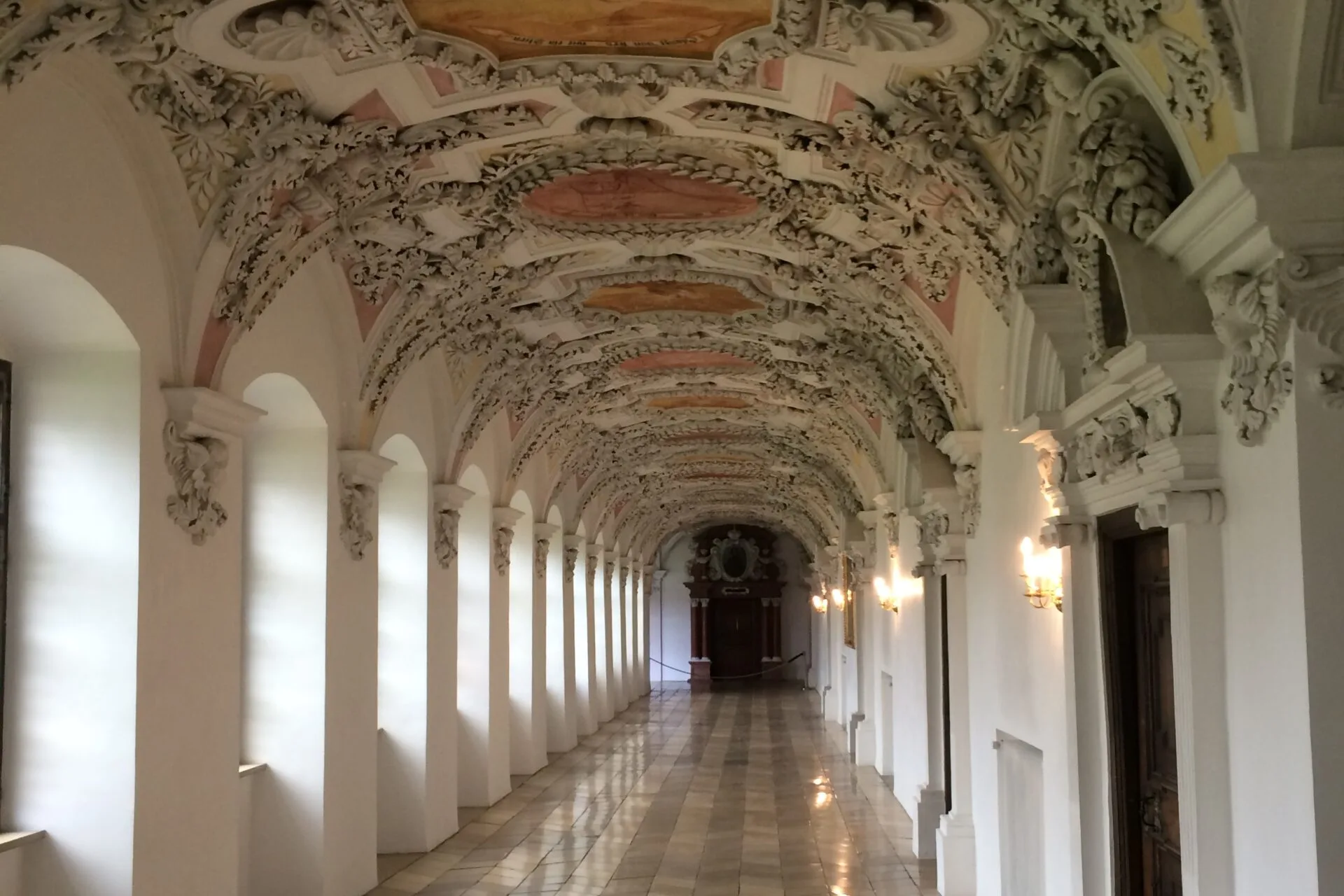
The Tassilo Hall in the abbey’s princes’ wing shows how fine their work was: flowers, laurel, oak leaves and vines, with a stag, a hare and a dog among them, all in stucco. The abbey rooms can only be seen on a guided tour, so it is best to ask the abbey directly about current times before you go.
Our granary belongs to this world of craftsmanship, too. Veit Üblhör built it in 1696, and in 1971 it was moved from Pessenhausen near Rott into the Stohrerhof garden.
Among ancient yews near Paterzell
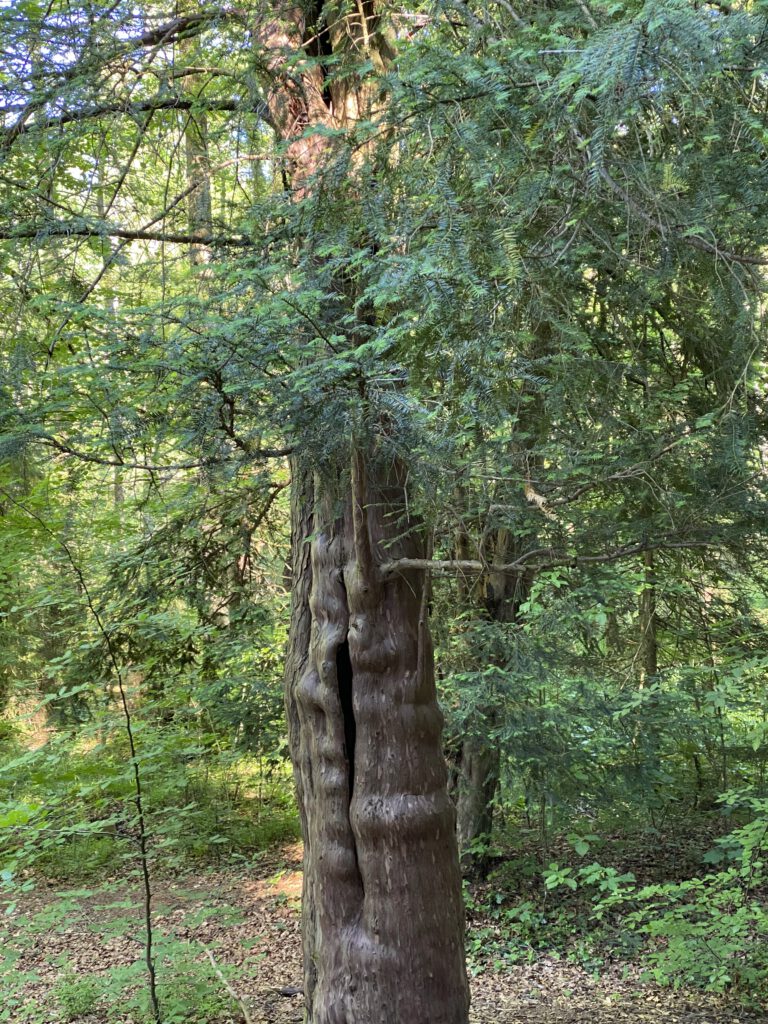
Just a few kilometres from Wessobrunn, near Paterzell, lies one of the most remarkable woods in the region. More than 2,000 yews grow here, many of them centuries old – one of the largest continuous stands of yew in Germany. The wood was declared a natural monument as early as 1913 and a nature reserve in 1939.
A nature trail of about one kilometre with ten information boards leads through it, and if you have more time you can extend the loop. You start in Paterzell, where you can also park. In late autumn, when the deciduous trees are bare, the deep green of the yews stands out all the more.
Up the Hoher Peißenberg
From Paterzell it is not far to the Hoher Peißenberg, at 988 metres the highest summit in the Upper Bavarian foothills of the Alps. At the top stands the pilgrimage church of Mariä Himmelfahrt, completed in 1619, beside the older chapel of grace from 1514.
The mountain has a second story to tell. The weather has been measured here since 1 January 1781, first by Augustinian canons and since 1952 by the German Weather Service – one of the longest series of measurements in the world. An information pavilion at the summit explains more and is open daily from 8 am to 8 pm.
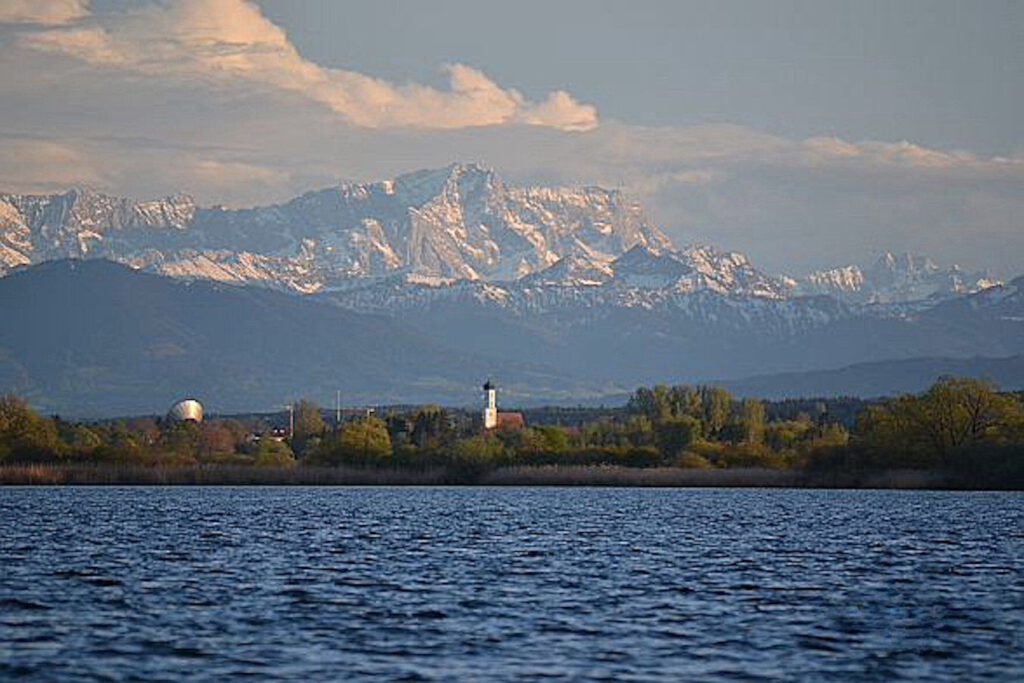
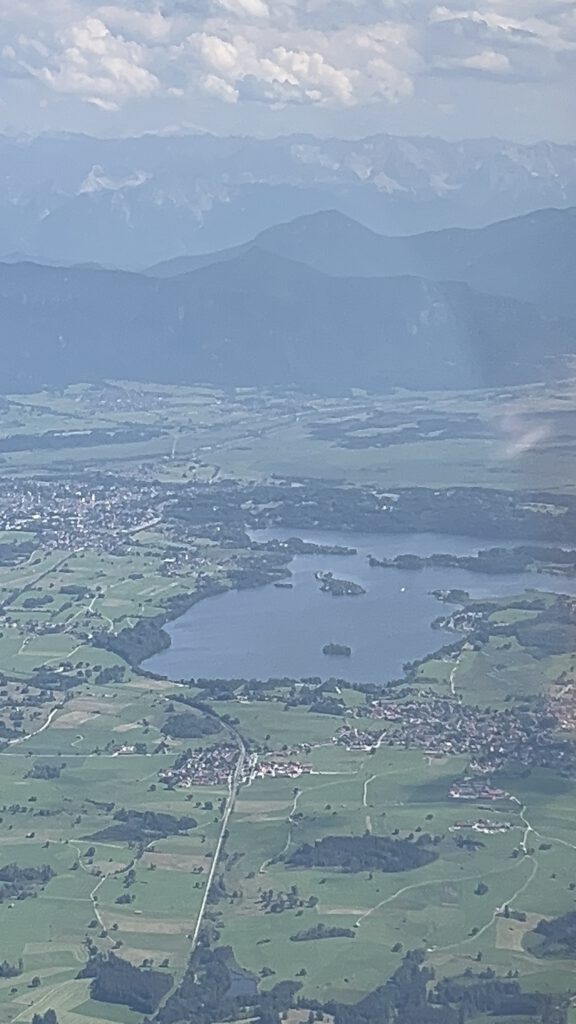
On clear days the view stretches some 200 kilometres along the Alps, from the Grünten to the Chiemgau Alps, with the Zugspitze in between. To the north you look out across the Pfaffenwinkel as far as Lake Ammersee.
Our suggestion for the day
- In the morning, the yew forest near Paterzell: the short loop takes about an hour
- Around midday, up the Hoher Peißenberg for the pilgrimage church and the panorama
- In the afternoon, Wessobrunn for the Tassilo lime tree and, if arranged in advance, a tour of the abbey
- If you would like to go further: the Wieskirche near Steingaden is open from 8 am to 5 pm in November, except during services
Back to the lake in the evening
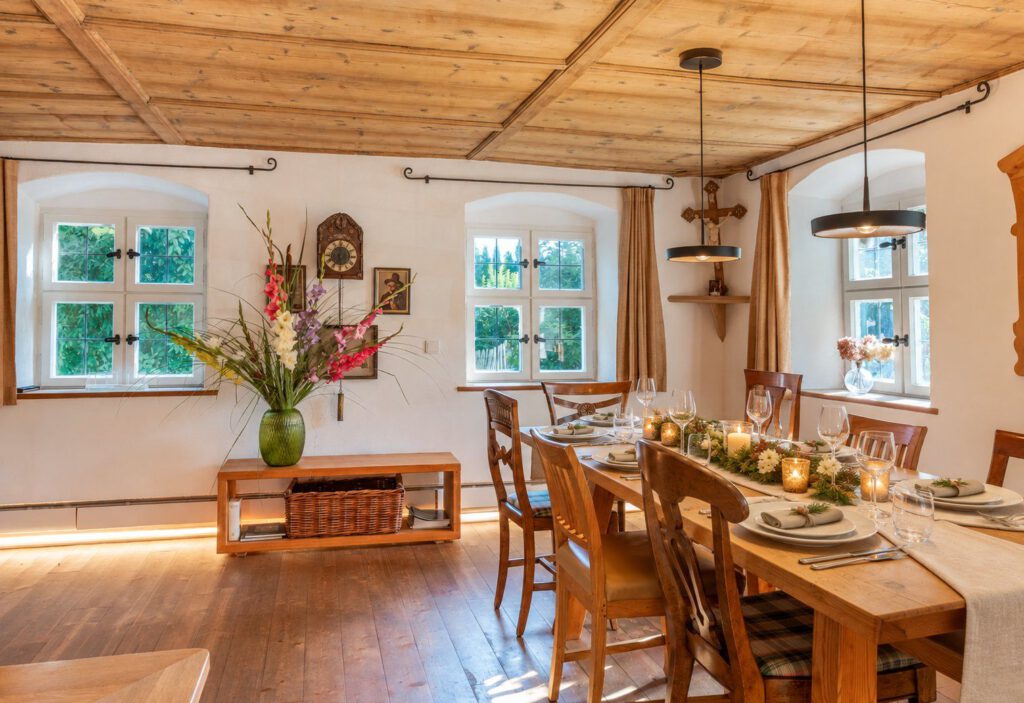
When darkness falls early, you are soon back in Riederau. The fires are lit in the first-floor living room and in the lounge, and the masonry stove warms the farmhouse Stube. With a side table, the extendable table seats all 15 guests together. And if you like, step out into the garden before dinner, to the granary made by a Wessobrunn hand.
Whether you come with family and friends or with a small team, you always have the estate to yourselves, in the Main House just as with the Entire Estate. You will see the price for your dates straight away in the calendar. We look forward to welcoming you.